
1
We find the restriction.
Skilled hands-on treatment of the joint or tissue that has stopped moving: found by testing, treated by hand, then retested in the same visit so you know whether it actually changed.
What It Is
Manual therapy is skilled hands-on treatment of joints and soft tissue by a Doctor of Physical Therapy. It covers graded joint mobilization for a segment that has stopped gliding, soft tissue and myofascial work for muscle that has thickened around an old problem, and gentle traction for a nerve that is being crowded. Every one of those is chosen for a finding, not applied to a region because the region is sore.
The mechanism is unglamorous and worth knowing. A joint that has been guarded for months loses accessory motion, the small glide that has to happen before the big movement can. Restore the glide by hand and the range comes back immediately, which is why manual therapy so often produces a change you can feel inside one visit. What it cannot do by itself is teach the muscles around that joint to hold the new range, so the hands-on work always hands off to loading.
That is the honest frame we use here. Manual therapy opens a window. Therapeutic exercise inside that window is what makes it stay open. Sold alone, it is a very pleasant way to keep coming back forever, and that is not what this clinic is for.
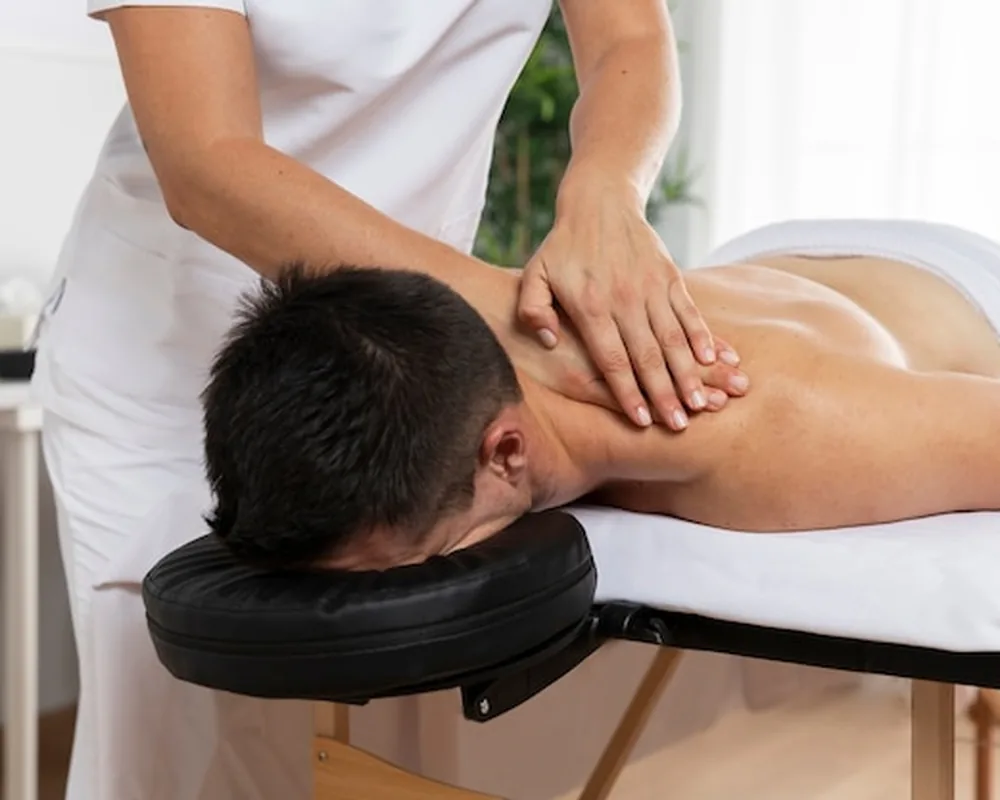 Treated by hand, then retested
What It Helps
Hands-on work earns its place when the limit is mechanical: a joint that will not glide, tissue that has shortened around an old injury, a nerve with no room. A sample of where it comes out most often:
A joint left stiff does not stay a local problem. The body borrows the motion from the segment above or below it, and eventually that borrowed segment is the one that hurts, which is how a stiff mid-back turns into a low back complaint nobody connects back to the original quiet joint.
What A Session Looks Like
1
We find the restriction.
2
We treat it by hand.
3
We retest it and load it.
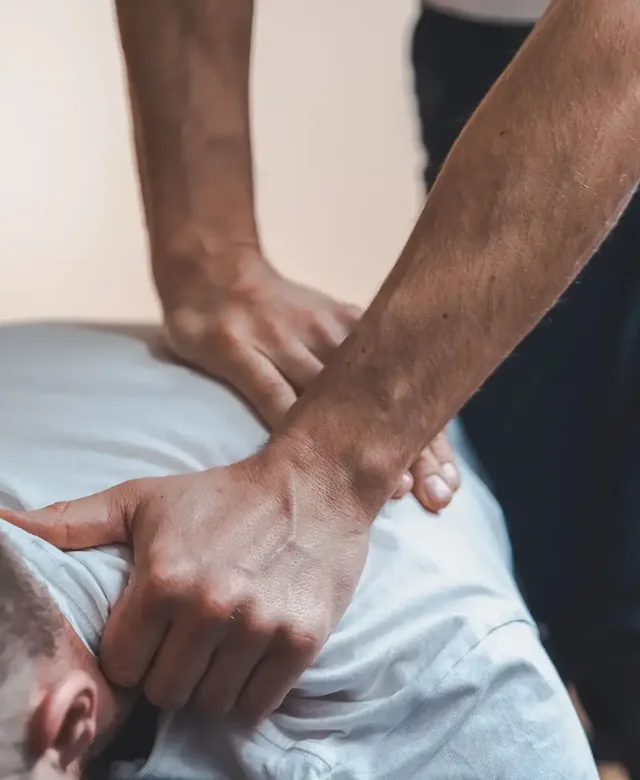
Your doctor tests a movement, finds the specific restriction, and treats it by hand: sustained pressure, a graded glide at the joint, or slow work along a line of tissue. Most of it feels like firm, well-aimed pressure on something that was already complaining. You set the ceiling out loud, and it is respected. Nothing here requires you to brace and get through it.
Then comes the part that makes it stick. The same movement is retested while the change is still fresh, and you load it, usually within a few minutes, so the new range gets used before your nervous system decides it was a fluke. You leave knowing what changed, by how much, and what to do tonight to keep it. Manual therapy sits inside your one-on-one visit with a Doctor of Physical Therapy, not in a separate room with a separate bill.
She stays focused on the success of patients, asks great questions and she is very methodical in her approach for healing.
How It Fits Your Plan
Calm it down.
Gentler grades of hands-on work on a tissue that is still irritable, dosed to settle it rather than prove a point.
Restore what’s stuck.
This is where manual therapy does its heaviest lifting: the joint glide and the tissue length that testing said were missing.
Build strength you trust.
Load through the range the hands just opened, so your body has a reason to keep it.
Make it stay fixed.
Less hands-on work, not more, and a short program that holds the range without us. Then we graduate you.
Manual therapy fits the person whose problem is mechanical: stiffness that has not budged with stretching, a joint that has been guarded so long it forgot its own range, or an old injury the tissue healed around badly. It also fits the person who has done a course of exercise somewhere else and got nowhere, usually because the joint underneath was never free enough for the exercise to land.
If you have had hands-on treatment before that felt lovely and changed nothing by Thursday, you are not difficult and you did not imagine it. You were given the window without the work that holds it open.
Pairs Well With
Manual therapy is a tool inside the plan, never the whole plan. Which tool comes out is decided at your evaluation and revisited every phase.
Questions, Answered
No. A massage is done to a region to help it relax. Manual therapy is done to a specific joint or tissue that testing has identified as the restriction, with a grip, a direction, and a grade chosen for that finding, and it is retested in the same visit to see whether it worked. The relaxation is welcome. It is not the point.
It should feel like firm, specific pressure on something that is already unhappy, not like being forced through a range you cannot control. Soft tissue work on an irritated area can be briefly uncomfortable, and you set that ceiling out loud. Tell your doctor to back off and the pressure comes off, because nothing about this technique needs you to brace against it.
On its own, hours to a few days. Hands-on work opens a window of easier movement; what you do inside that window decides whether it closes again. That is why manual therapy here is always paired with loading in the same visit, so the new range gets a reason to stay. Hands alone is a rental. Hands plus loading is the fix.
No. Texas Direct Access means you can book the evaluation yourself. Manual therapy is not booked as a standalone appointment here anyway; it is one of the tools your Doctor of Physical Therapy reaches for once the evaluation shows a restriction that hands can change.
Book Your Visit
Five short questions. A real person from our front desk calls you back with times that fit your week. No phone tree, no ‘someone will reach out.’ Rather pick a slot yourself? Book online any time.
5.0 · 94 Google reviews
A real person calls you back during office hours
Step 1 of 5
That’s the hard part done. We’ll call during business hours to lock in your time.
Visit Us
Suite 203 on Cypress Creek Road in Cedar Park, open Monday to Friday from seven. Come see the place before you commit, if you like.