
1
A cause-first evaluation.
One-on-one with a Doctor of Physical Therapy, every visit: a cause-first evaluation, hands-on treatment starting at visit one, and a plan with an endpoint you agree to before you start.
What It Is
Physical therapy here starts with a question a busy clinic rarely has time for: why does this hurt, not just where. Your first visit is a cause-first evaluation, 40 minutes spent testing how you move, how much you can hold, and what the joints above and below the loud one are doing, so the plan treats the reason instead of renting relief from the symptom.
From there, every visit is one-on-one with a Doctor of Physical Therapy, the same doctor, hands-on, for the full 40 minutes. All four of our treating clinicians hold a doctorate, which is why the explanation you get is mechanical and specific rather than a shrug about wear and tear. Care moves through four named phases, Pain, Prime, Perform, and Prevent, in that order, each with its own job and its own criteria for moving on. You always know which phase you’re in and what earns you the next one.
And the plan has an endpoint. It’s named out loud at your evaluation, before you agree to anything, because the goal is to finish the work and hand it back to you. You don’t need a referral to start either: Texas Direct Access means you can book the evaluation yourself, whether you are driving in from Cedar Park, Leander, Brushy Creek, or Round Rock.
 40 minutes, one-on-one, every visit
What It Helps
Physical therapy is the foundation every other service here is built on, which means it touches most of what walks through the door. A sample of what it commonly addresses:
Pain that gets managed instead of explained rarely stays in one place. The knee starts borrowing from the hip, the hip starts borrowing from the back, and the list of things you have quietly stopped doing gets one item longer every few months until it is the shape of your week.
What A Session Looks Like
1
A cause-first evaluation.
2
Hands-on treatment, same visit.
3
A plan you’ve heard out loud.
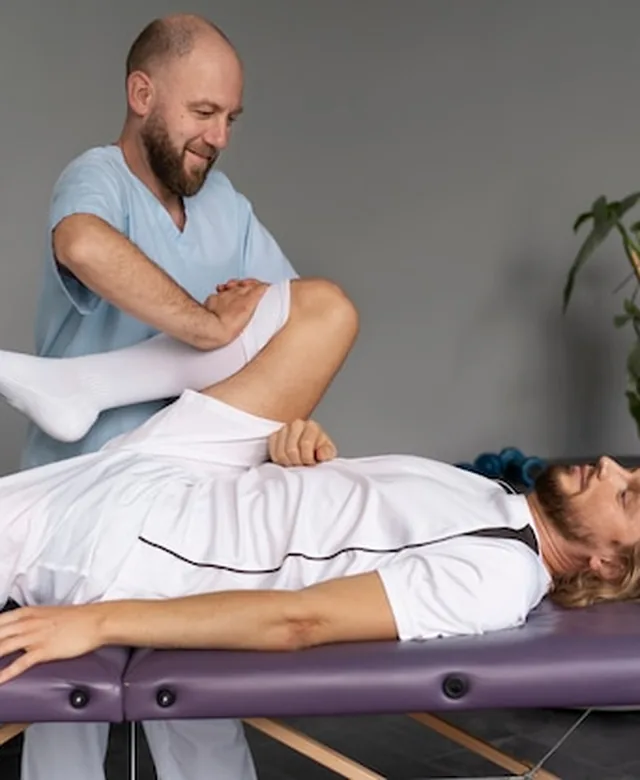
The first visit is the longest and the most important. It opens with a conversation about when this started and what it is costing you, moves into hands-on testing of movement and strength, and ends with a plan you have heard out loud. Treatment starts in that same visit, so you leave having felt something change, not just having been measured.
Every visit after runs the same shape: a check-in on how the last few days actually went, hands-on manual therapy where the evaluation pointed, then movement or loading work dosed to the phase you are in. Your doctor stays in the room the whole time, adjusting as your body answers. Before you leave, you know what today’s work was for, what to do between now and next time, and what the next visit is building toward.
The place is very nice and always clean. My physical therapist is great at customizing at-home workouts that have made a noticeable difference since I started.
How It Fits Your Plan
Calm it down.
Hands-on treatment begins at the first visit. You leave understanding what’s actually going on, and you feel a difference early.
Restore what’s stuck.
Targeted mobility work for the joints and tissue actually holding you back, dosed to your body, not a printed sheet.
Build strength you trust.
Progressive load against standards you have to clear before moving on. Confidence, here, is a training effect.
Make it stay fixed.
Testing before you’re cleared, then a keep-it-gone program sized to your real week. Then we graduate you.
Physical therapy tends to fit people carrying something that has overstayed its welcome: an injury that hasn’t settled the way it should have, an old ache that has quietly rearranged your week, or a recovery from surgery that needs a progression instead of a guess. You don’t need a referral, and you don’t need to already know what is wrong. Finding that out is what the evaluation is for.
The people who choose one-on-one care over a rotating class and a photocopied sheet are usually the same type. They want to know why, in words that hold up. If that describes you, you’re the right patient for this room.
Pairs Well With
None of these are sold separately here. They are tools inside one plan, chosen at the evaluation because your body asked for them.
Questions, Answered
No. Texas Direct Access means you can book an evaluation without seeing another provider first, so nothing has to wait on someone else’s schedule. If your insurance plan requires a referral for reimbursement, we’ll flag that during your free benefits check and help you get one before it holds anything up.
The biggest difference is the visit itself. Here it is one-on-one with a Doctor of Physical Therapy for the full visit, not split three ways with a tech running the exercises. All four of our treating clinicians hold a doctorate, the evaluation is cause-first rather than a printed sheet, and your plan has a named endpoint instead of an open-ended string of visits.
It depends on the cause, not a formula. Your evaluation gives you a specific estimate, and care moves through four phases, Pain, Prime, Perform, and Prevent, each with its own criteria for moving on, so the length of your plan tracks your progress rather than a preset schedule. Hands-on treatment starts at the evaluation, so the first visit is already part of the work.
Wear clothes you can move in, bring your insurance card if you have one, and bring any imaging or reports you already have, though you do not need imaging to start. We are on Cypress Creek Road, open Monday through Friday, and the evaluation itself, hands-on treatment included, runs about 40 minutes.
Book Your Visit
Five short questions. A real person from our front desk calls you back with times that fit your week. No phone tree, no ‘someone will reach out.’ Rather pick a slot yourself? Book online any time.
5.0 · 94 Google reviews
A real person calls you back during office hours
Step 1 of 5
That’s the hard part done. We’ll call during business hours to lock in your time.
Visit Us
Suite 203 on Cypress Creek Road in Cedar Park, open Monday to Friday from seven. Come see the place before you commit, if you like.